Love Doesn’t Need Subtitles
How Bad Bunny’s Super Bowl Performance Nudges Kids Towards A Better World
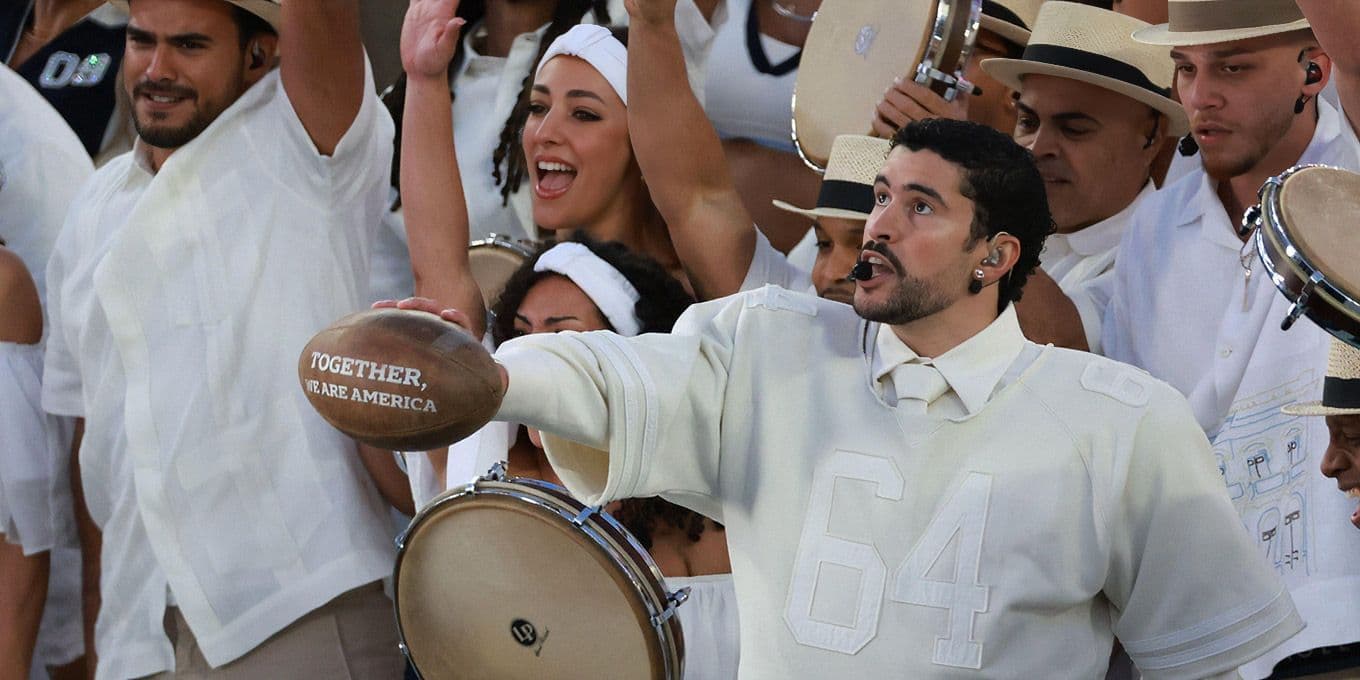
One of the largest events in the US calendar, The Super Bowl holds a lot of influence. From the use of its premium advertising slots, to the products the athletes have at their disposal – it’s a marketer’s dream.
But beyond the sport, there is art.
The halftime show is known globally for giving 10-15 minutes of creative musical expression to one headline artist; the halftime guest artists are a welcome bonus for many, too. This year, for the 60th Super Bowl, Bad Bunny was chosen to take on this rather large task. The current political climate in The US is showing us a lot of negativity enforced on immigrants – and those perceived to be immigrants. This meant that headlines and discussions surrounding the performance began long before the show. There were many that challenged the idea of the Puerto Rican artist taking the stage due to his music being in Spanish – some even going as far as to spread the misinformation that Puerto Rico is not a part of The United States.
While there is much we could write about the negativity surrounding this topic, we will draw the line here.
What happened on the field of that stadium was a beautiful expression of culture, community and creativity brought together by music. The thoughtful set design included real humans dressed as sugarcanes, designed to create the illusion of Bad Bunny's hometown, Vega Baja. Being a human sugar cane naturally involved fighting the urge to dance along to the infectious rhythms. Beautiful fashion statements made their debuts, not forgetting the stunning dress worn by Lady Gaga – designed by Raul López, a Brooklyn-based creative director from the Dominican Republic. And if that wasn’t enough to love, a real wedding took place throughout the show that saw fans of the artist celebrate in front of one of the largest crowds of all time (if you count all the viewers, possibly the largest crowd ever).
Not only that but the nuances of Puerto Rician culture – nail salons, playing dominoes, even the truck Bad Bunny danced on – all play a part in the richness of modern representation. It wasn't tied down to art references hidden away in museums; the daily acts of existing became a radical form of expression. Amongst the many cultural landmarks touched upon in the performance, Benito was able to draw viewers to tougher subjects to face, including the crumbling power grid that was battered in Hurricanes Irma and Maria. But how did he manage to fit in such a statement? By performing his song “El Apagón” which translates in English to “The Blackout”), from a sparking utility pole.The resistance was no longer focused on academic movements, it was in every step made by the dancers and every beat of the music.
For young viewers one key component shone brightly amongst the sea of color and culture and that is that passion and creativity don’t need translation. Throughout history, art like opera has existed without the addition of subtitles and this was no exception to that. For 13 minutes Spanish took center stage and showed many young viewers that their language was just as valuable as any other, holding the attention of over one hundred million viewers. In one moment, that captured the hearts of many, Benito gifted his recently won Grammy to his “younger self”. This act sent an undeniable message to young viewers about what can be achieved with dedication and hard work by any young person.
Benito’s closing choice to include many countries outside of the US in his “God bless America” cry allowed viewers to join him in becoming a part of a much bigger, much richer shared moment. While he could not call them all out, he ensured that their national flags were present on the pitch. This might not have seemed like much but it swept the internet as a chance for people to join in the celebration of togetherness.
If you haven’t caught the full video yet, we deeply encourage you to check it out and to see for yourself this demonstration of being radically authentic to one’s own background and the power of unfiltered, untranslated love.